
by Jean Powers
This article appears in the spring 2022 issue of American Ancestors magazine.
For more than twenty years, Matt Paxton has helped homeowners sort through their accumulated possessions. What began as a small attic-cleaning business developed into the hit A&E show Hoarders, which was renowned for its compassionate and resourceful approach. Driven by his fascination with family stories, Paxton launched Legacy List with Matt Paxton on PBS in 2019. Using time-tested organizational techniques and genealogical and historical research, the Legacy List with Matt Paxton team of Matt Paxton, Jaime Ebanks, Avi Hopkins, Mike Kelleher, and Lex Reeves helps people downsize their inherited family history collections while preserving the stories behind their possessions. Senior Editor Jean Powers spoke with Matt about his work and what family historians can learn from the show.

Helping people sort through a lifetime of accumulated stuff takes a lot of patience and compassion. How did you get into this line of work?
I lost my dad, my stepdad, both my grandfathers, and one grandmother in 2002, when I was 24. After they died, I went through their houses, and sorting through their stuff brought up memories of the stories they told. My dad was a character. I went through his house first. I found his Miami Vice-style jacket. The week before he died, he cut off the ponytail he’d had since the 1980s and put it in the back of a drawer. I found it three months later. He died twelve years before my kids were born, but my sons know their grandfather because I tell them his stories.
I got into this work because I really enjoyed hearing the stories. I started cleaning attics, and word got around in our church. One time I found matchbooks from a restaurant that no longer existed, and the homeowner told me that she and her girlfriends would pick up soldiers returning from the war [World War II] at the train station and walk with them to the restaurant to dance and stay out until ten at night. Hearing an 80-year-old describe her 18-year-old self was fascinating, and I know she enjoyed sharing her stories. I started getting calls from people who had lived in one house over fifty or so years and amassed a lot of belongings and didn’t know how to begin the decluttering process. They knew that I’d walk them through the steps and respect their memories instead of just stuffing everything into donation bags.
What is the process for guests on Legacy List with Matt Paxton?
The process begins with the creation of a list of five treasured items. If your house burns down, what would you want to save? From this list of possessions, future generations will be able to connect with the most important stories of you and your ancestors.
Legacy List with Matt Paxton has two main goals for guests. We want people to know that they CAN downsize, and we help them get started. We also want to help them explore their family history and create legacy lists. The show gives our guests a voice so they can share these great stories with our audience.

There’s a running joke among genealogists about the fine line between hoarder and family historian.
Yes, I first went to the RootsTech conference when Hoarders was gaining popularity, and everyone knew the show. I’m not used to being that well known. I think the show also made genealogists feel better about their collections, which were meaningful and informative, not just an accumulation of stuff.
Your Hoarders subjects were constantly acquiring more things through shopping or trash-picking etc., whereas family historians are absorbing all the heirlooms and documents of multiple branches of the family.
On Hoarders we discussed how the fixation on a “perfect past or fake future” prevents one from living in the present. We hold onto an idealized past or we buy things to prepare for an amazing future, and it keeps us from facing the struggles of the life we have right now. Hoarders have often experienced severe pain and trauma and are looking for happiness and self-worth in material possessions.
The Legacy List with Matt Paxton situation is different. The people we work with are inheriting their parents’ or grandparents’ houses and collections. These earlier generations worked hard and were proud of the lives they built for themselves and the things they were able to buy for their families. They saved these many items because they wanted their children and grandchildren to be able to enjoy the possessions their parents and grandparents worked so hard for.
You’re working with Boomers. Their children—Generation X and Millennials— often don’t have the ability or the interest in inheriting these large collections of furniture, heirlooms, and papers.
I just got off the phone with my mom, who is moving. She never fully appreciated what I did for a living before, but now she’s always calling me for advice on what to do with all the things she’s inherited or collected. She wants me to take more than I’m able to, so I’m helping her sort and prioritize everything.

My sister and I have been in negotiations about my mom’s china set since 2011. Do we send it to gather dust at a thrift store? We’re never going to use it. But it was important to my mom, who didn’t have many expensive possessions. Similar decisions are being faced by Boomers and Gen-Xers who find there’s no next stop for family heirlooms.
On the show, we help people find places to donate their heirlooms and possessions that repurpose or upcycle. China sets are always a topic of discussion. As family sizes shrink, the number of possible recipients for china sets becomes more limited. One grandchild can find herself owning three or four sets from previous generations. There’s a feeling that letting these sets go is a betrayal of someone’s memory. But if the china isn’t being used, its real meaning lies in its story. What did it mean to your mother? Can we record that memory, save one setting, and let the rest go? The story lives on but the obligation is lifted.
We love our parents, but we may not love the same items they loved. In my family, the dining room was the center of family life. The furniture, dishware, and cutlery in that room was important to my parents. For my own family, experiences are important. We go to the beach, or we go skiing. The moments we cherish were created in other rooms and other homes. What it all comes down to is the stories, not the stuff. I created Legacy List with Matt Paxton to preserve those stories and send them out into the world.
I find it heartbreaking when I go to a flea market and see piles of family photos and family albums that someone lovingly compiled. By narrowing down the number of items on the legacy list, you ensure that the stories are preserved.
If the story isn’t told, the legacy is lost. If our parents and grandparents can share the story of an item, it becomes easier for them to let go of it. Because it’s not the silverware or the soap dish that’s important, it’s the memory. And sometimes it turns out that a child or grandchild wants an item once they hear the story connected to it!

Family historians can also forget to record their own experiences.
That’s definitely a problem for many family historians—they get so caught up in documenting the past they may forget to talk about themselves and record their own stories and memories.
We interviewed Crystal Haynes, an amazing woman in Dorchester, Massachusetts. Crystal is a retired schoolteacher and the family historian for several branches of her incredibly successful African American family of activists and musicians. Her uncle was close with Martin Luther King Jr., another uncle is a renowned jazz percussionist, and her nephew was a member of Bel Biv Devoe. Crystal’s equally important story had gotten lost among the artifacts of her famous family. We wanted to help her record her own memories while also sorting and organizing her collections.
In one episode, a New Jersey family put a vintage battery charger on their legacy list. It’s interesting to see the difference between the items of significant monetary and historical value in a collection, and what items are cherished by the family. It seems that those objects are often totally different.
That was a ten-dollar battery charger, in a collection of priceless antiques and one-of-a-kind artifacts. Family members recall their grandfather using that battery charger every day; he always had it with him. Creating a legacy list helps families clarify which items they want to keep and which can be sold, donated, or passed to someone else.
I don’t want any price tags on the show. That’s not what we’re about. We’re not interested in how much someone was worth, we’re interested in the impact they had and the stories they left behind. We did bring in an appraiser for a family that planned to use the proceeds from the sale to fund a school in Nepal. That’s their new legacy, coming out of the old legacy. Or we may make connections with local museums or historical societies that can receive items and preserve them. I discuss this in my new book—many families find that they get more intrinsic value from donating an item than from selling it, and they get more satisfaction from donating it than from keeping it.

In an episode called “Don’t Go in the Basement,” the grandfather collected the most amazing items—massive geodes, dinosaur teeth, vintage electronics, just everything under the sun. Most of the episode was about him and his life, and you helped the family with the daunting task of sorting through this amazing collection while preserving the memories. If you looked at each object individually, you wouldn’t know much about him, but when the stories are collected, a clear picture emerges of who he was and the curiosity that drove him.
That house sold quickly, and the family had just two days to pack up the collection and move it to the adult daughter’s basement. When our team arrived, the basement was packed to the ceiling. We were able to start cataloging everything, donating some items, and selling others, and using the process to record the stories of this larger-than-life figure.
Because the grandfather died during the Covid pandemic, the family was unable to hold a proper funeral, so we used the end of the show to memorialize him. A lot of people really connected with that episode, because many of us have a crazy, awesome grandparent. This guy lived his life really well, he enjoyed every minute. That’s a good message for the rest of us. It was a joy to watch this family laugh and cry at the same time about their grandpa. I felt a real connection to that family, and we still keep in touch.
I really like that you’re telling the stories of regular people. You show that their stories are just as interesting as those of a celebrity. It’s the story of America, the setbacks and the triumphs.
I want to hear stories of the failures as well as the successes. We want to feature the people whose stories don’t get told as much in traditional media. We actively seek diverse subjects for our shows.
Lillian Lambert was the first African American woman to get an MBA from Harvard. One of her legacy list items was a standard iron water pump. Her father was a tobacco farmer in Virginia and they lived in a shack with a dirt floor. Young Lillian had to carry buckets of water from the creek to the house. When she was twelve the family got the water pump, and suddenly Lillian had two extra hours a day to read. That pump changed her life trajectory.
Sometimes the show goes into a deep dive on a certain item—it could be historically significant and rare, or it could be something common and ubiquitous, like a plastic Cozy Coupe kids’ car. How do you decide which items to feature in these mini documentaries?
We call those two-minute segments “history pods,” and we select the items we think are interesting. In 1991, the Cozy Coupe was the top-selling car in the US. It outsold the Honda Accord! Little facts like that get us excited.
We talk a lot in our work about how family history isn’t just about documenting your own family’s lines or stories, but also about placing them in a historical context.
The history pods show a snapshot of America at a certain time. We did a story on telephones, and I showed my kids an old rotary-dial phone. I told them about my grandmother’s phone number, which began with two letters. They were fascinated. It’s so different from what they know. We want this show to be watched by three or four generations. I’ve watched the show with my grandma, my mom, me and my wife, and the kids. Everyone has something they find interesting in the show. My kids love the history pods. If that keeps them learning about history, it’s great.
What’s the most unusual thing you found on Legacy List with Matt Paxton?
I would have to say the historical hair collection. This guy in New Jersey had hair from John Lennon, John F. Kennedy, and Abraham Lincoln. That was pretty out there for me, but I ended up finding it fascinating. We’ve found books, especially in Mormon and Pennsylvania Dutch communities, of ornate hair knots and other hair art. Hair art seemed odd when I encountered it for the first time, but the more I learn about it the more intricate and beautiful it becomes to me.

What is on your legacy list?
My dad’s old Tiffany ring is on the list, along with a painting of the Beastie Boys that was sent to me by an artist who appreciated Hoarders. My mom put a generational cookbook together for me, with all the recipes she could collect from her and my father’s families. All the ladies from my church contributed recipes, and so did my wife. Every person who has really valued me has shared a recipe in their own handwriting. Watching my son cook using that book is really cool. He and my grandma would have loved each other, and when he’s reading her recipe for apricot pie it’s like she’s there with us.
One of my favorite items is a photo of my grandparents in front of their country store. When they were in their fifties, my grandparents took a driving trip from their home in Oklahoma to Colorado on the Wyoming border. They stopped at a little store so my grandpa could pick up some bait worms for fishing. My grandmother waited in the car. She said, “You know, he was in there about ten minutes longer than normal. Then he came out and he says, ‘We’re moving here. I bought the store.’ And I said, ‘Okay.’” They moved to Colorado, built up their store, established a post office and became postmasters, and lived there happily for the next thirty years. I grew up spending every summer on their ranch. My kids all tell this story like they heard it directly from their great-grandparents because they hear it all the time from me.
You come in when people need to downsize, or their collections have spiraled out of control. What advice would you give to our readers who are trying to manage their family heirlooms and papers?
Start with your legacy list. Write down your must-haves. What do you want people to know about you? How do you want to be remembered? Choose those five items and write down the stories.
Get serious about the heirlooms you want your kids or grandkids to have and give them away while you are still alive. Don’t wait until you are dead—you can enjoy watching your family using those things now. And it gives you the opportunity to share the story of the item now, and to see new stories being made with it.
A lot of our readers are going to want to appear on your show. How do they contact you?
We want to be on the air for a long time and we are always looking for more families to feature. Visit MyLegacyList.com and click “Be on the show” to submit your story! You can also view past episodes and read about the show on the site.
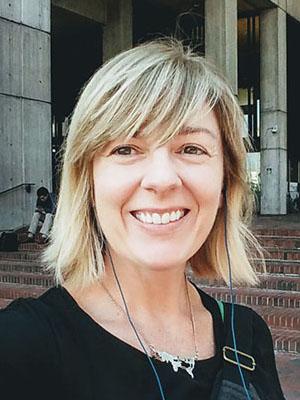
Jean Powers is Senior Editor at American Ancestors.
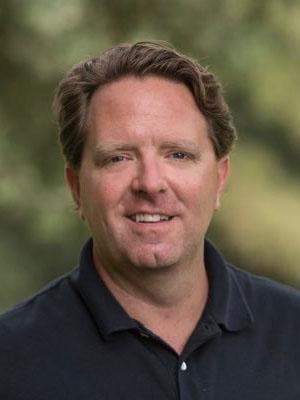
Matt Paxton is a down-sizing and cleaning expert, television host, author, and host of Legacy List with Matt Paxton.
Article images © Shipyard Entertainment, Inc. 2020.